Music created
by living coffee plants
We didn't set out to make ambient music. We set out to understand what specialty coffee plants sound like when you listen to them — really listen.
Most ambient music is made about nature. Recorded near it, inspired by it, named after it. We wanted to know what it sounded like to listen to nature itself — not the birds or the rain, but the electrical life inside the plants.
In early 2026, we partnered with HILA Música de las Plantas — pioneers in plant bioacoustics — to instrument Geisha and Borbón Sidra coffee plants at La Palma & El Tucán in Colombia. Using non-invasive biosensors, HILA captured the electrical activity of living plants. Those signals became the foundation of our catalog.
The result is something genuinely new: music with a verifiable origin. Not “nature sounds” recorded in a park and uploaded anonymously. Not generic lo-fi generated by an algorithm with no connection to place. Every texture in our Sleep Geisha or Focus Sidra tracks carries the electrical fingerprint of a specific plant, growing at a specific altitude, on a specific farm where you can taste the coffee.
We believe this matters. In a world of synthetic, faceless ambient music, provenance is the ultimate differentiator.
How we capture plant music
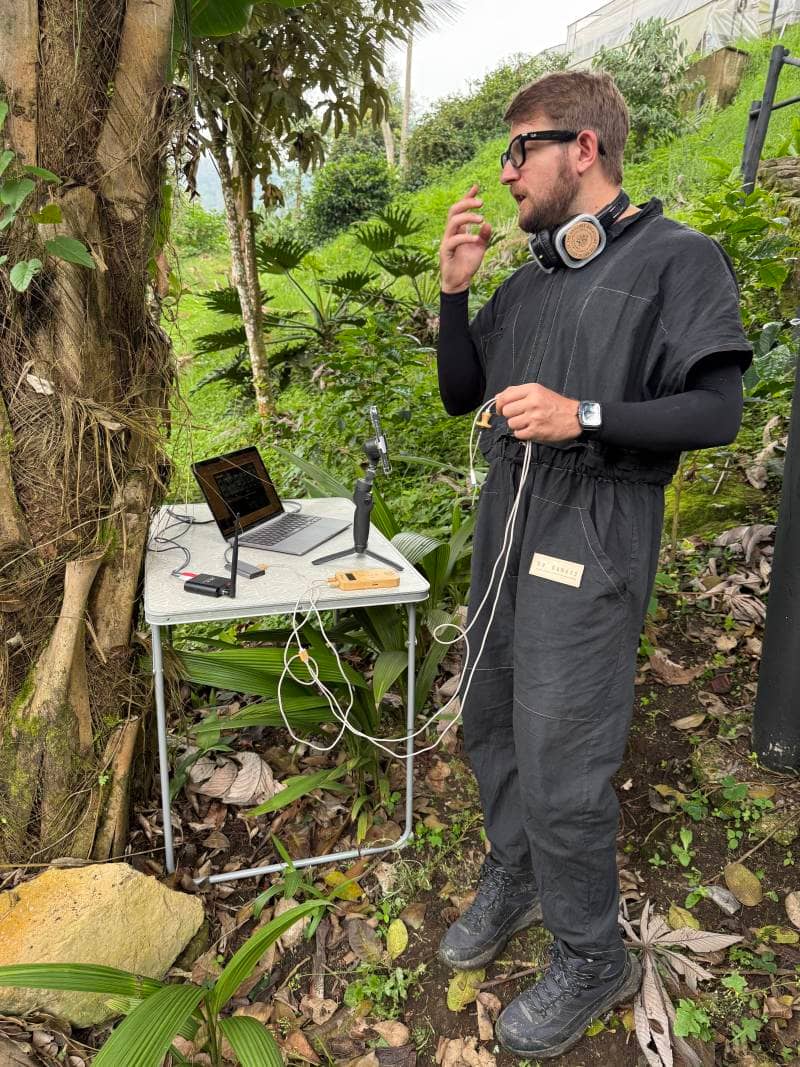
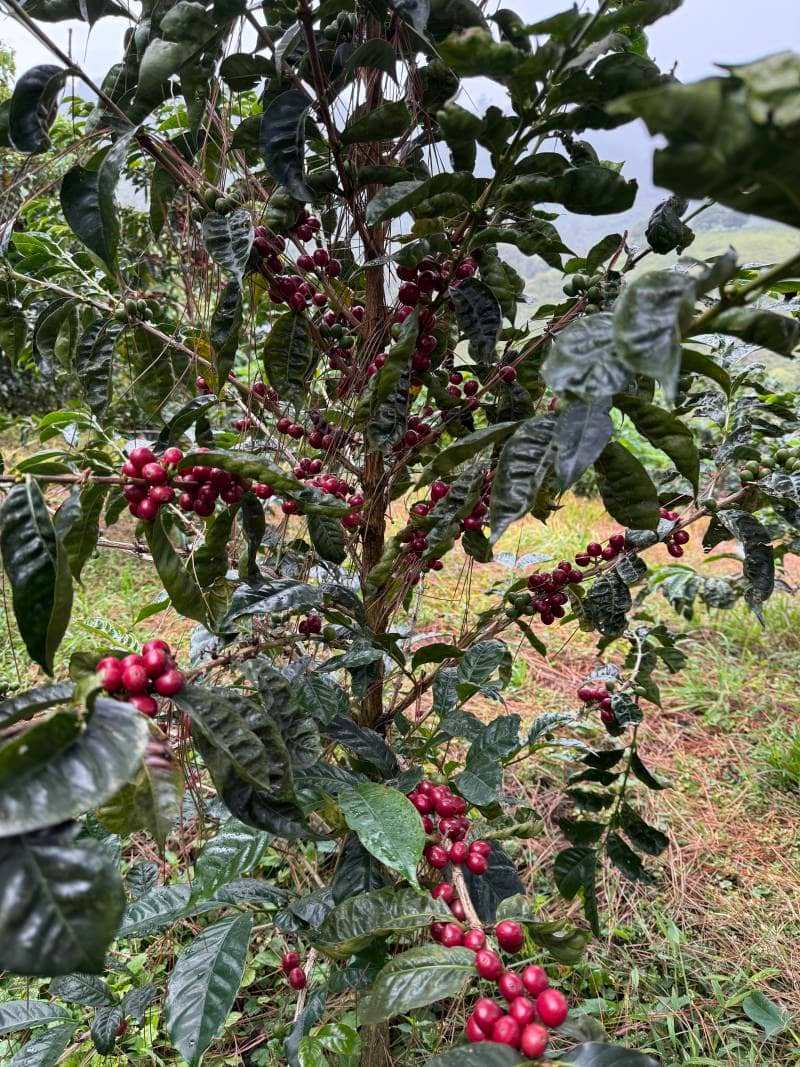
HILA biosensors attach directly to living plants. These are real photographs from the recording session at La Palma & El Tucán.
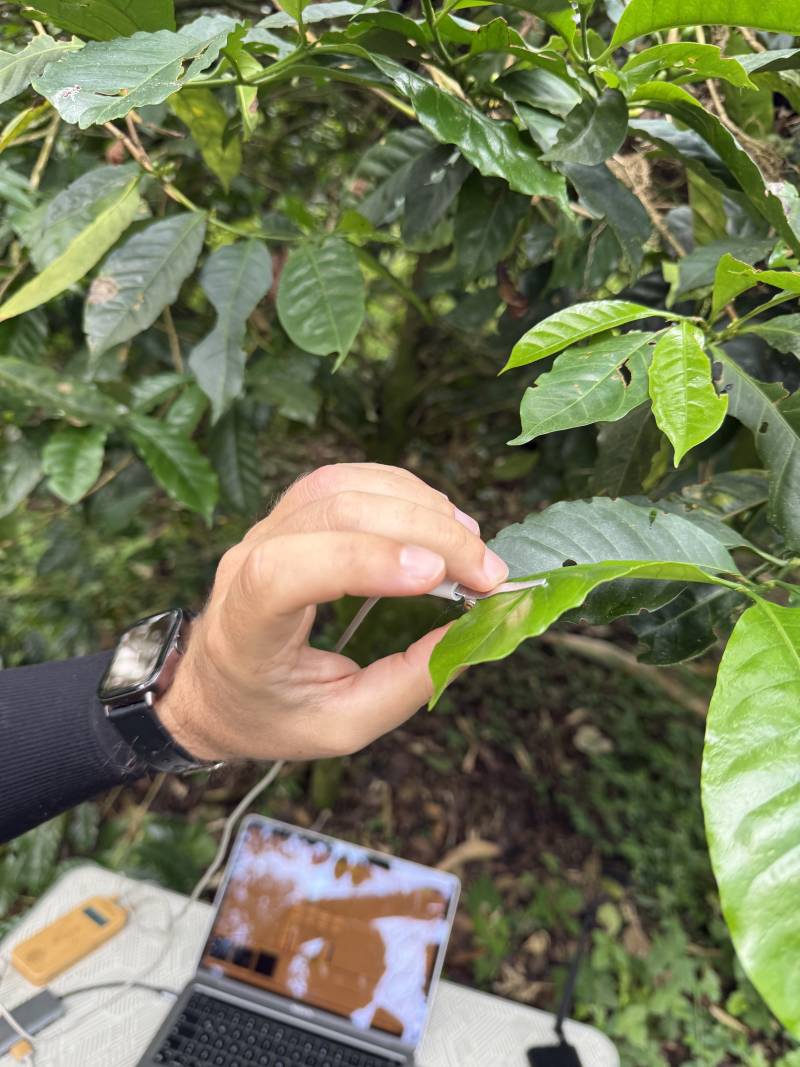
Biosensor attached to living plant
Electrode placed directly on a living coffee leaf
Signal recording
In the field — La Palma & El Tucán
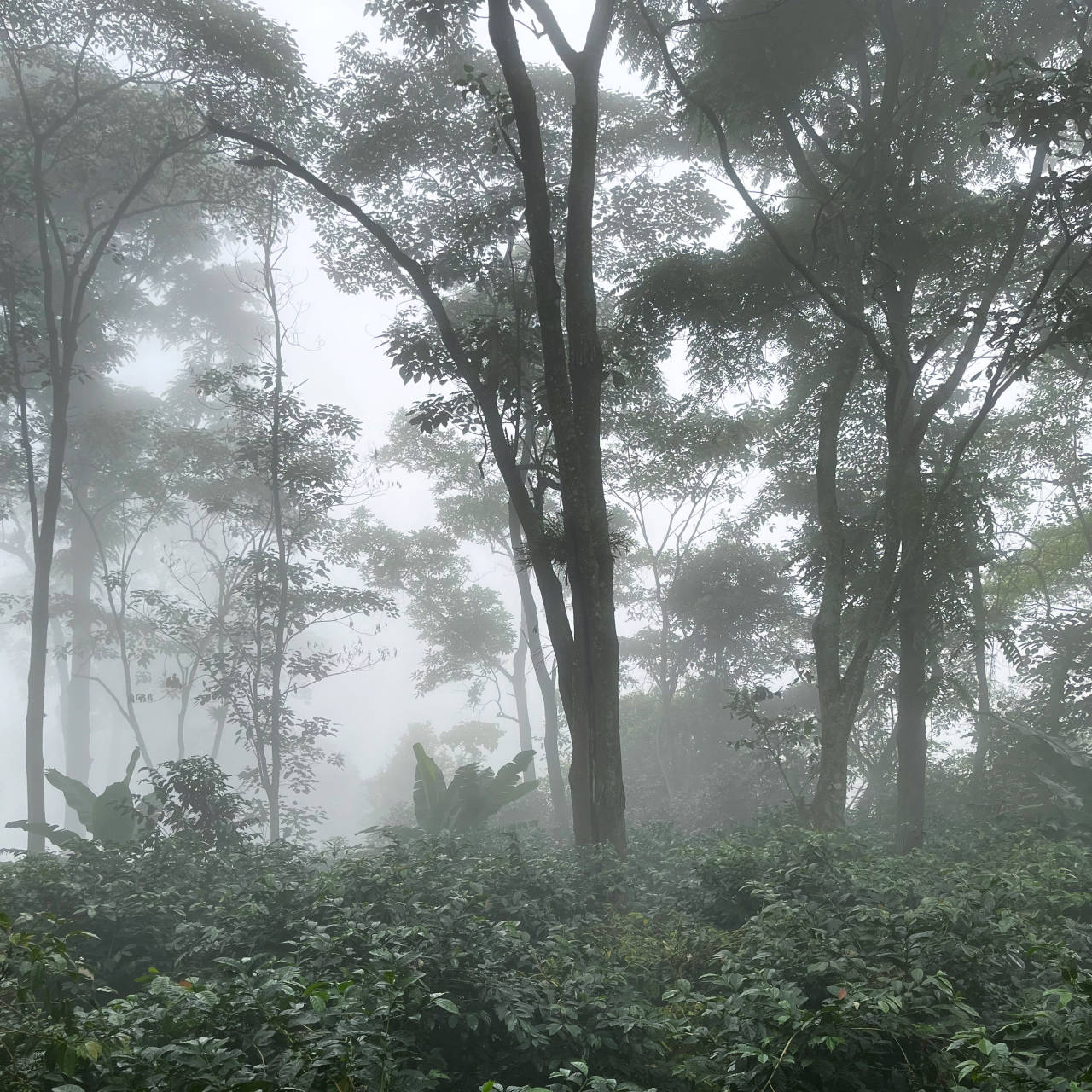
Cloud forest, 1,700m, Cundinamarca, Colombia · 2026
The farms
Every sound has a GPS coordinate. Here are the two farms behind our catalog.
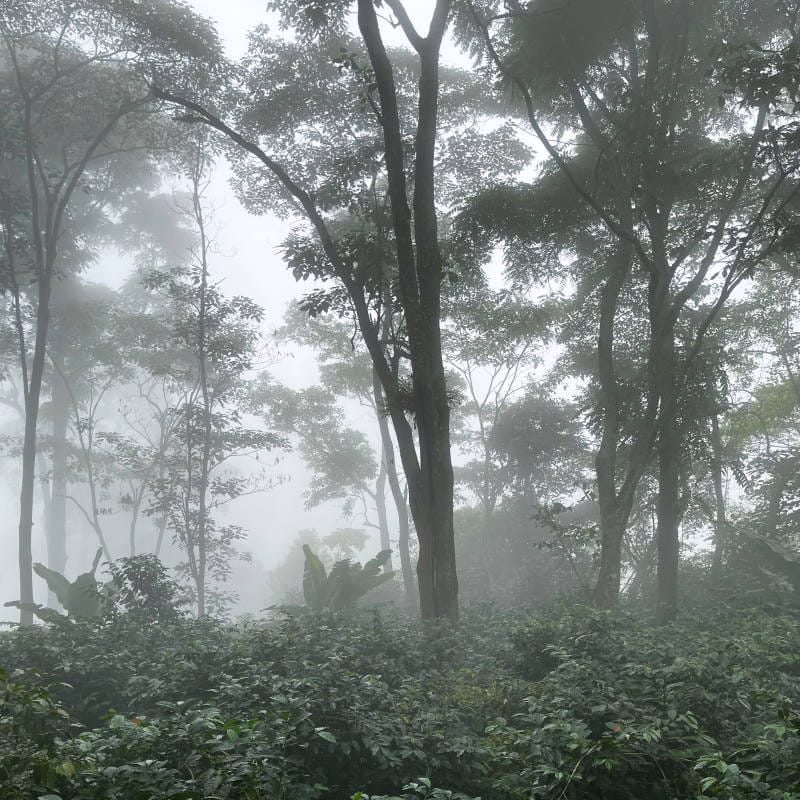
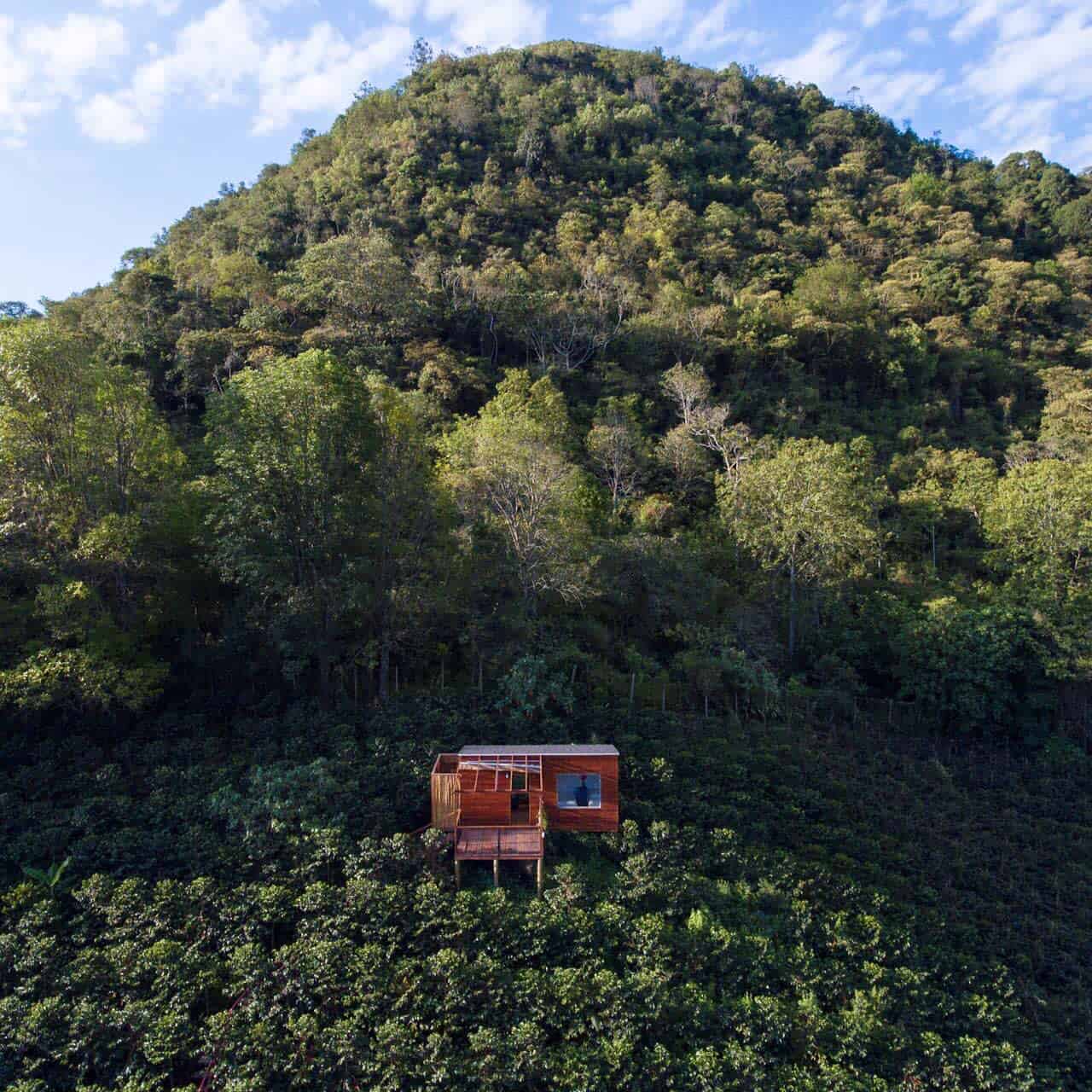
La Palma & El Tucán
La Palma & El Tucán sits in a cloud forest microclimate at 1,700m in Cundinamarca — where mist is almost always present, where award-winning Geisha coffee grows slowly, and where HILA's biosensors found five distinct plant species worth recording. The soundscape here is layered and dense: tropical rain, bird choruses at dawn, the quiet electrical life of plants responding to their environment.
HILA recordings here:
- • Geisha plant bioelectrics (Sleep Geisha 1hr)
- • Borbón Sidra bioelectrics (Focus Sidra 1hr)
- • Java, Banano, Chachafruto
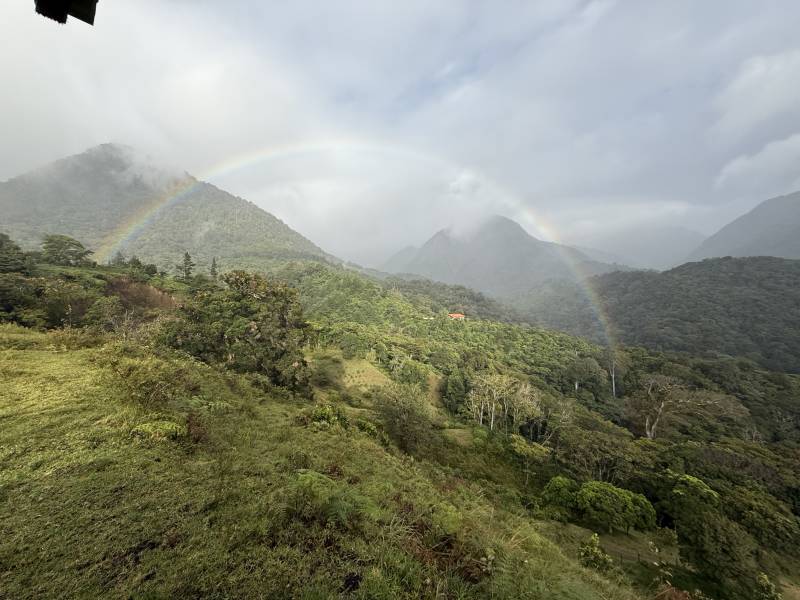
Flying Pumas
Flying Pumas sits on volcanic highland soil near Parque Internacional La Amistad — one of the most biodiverse ecosystems in the Western Hemisphere. At 1,800m in Chiriquí, Pacific moisture and highland elevation shape a soundscape unlike Colombia: the Resplendent Quetzal, the Three-Wattled Bellbird, volcanic rain patterns, and a quality of light that shifts quickly. Boutique micro-lots. A wholly different character.
Sounds recorded here:
- • Volcanic highland rain
- • Quetzal and highland bird chorus
- • Dusk transition soundscapes
From biosignal to bedroom speaker
Here's the exact process — no buzzwords, no vague claims about “healing frequencies.”
Bioelectric signals in plants
Plants use electrical signals to communicate — between roots, leaves, and cells. When a cloud passes over, when water flows through roots, when insects land — these events create measurable electrical changes.
HILA sensors capture them
HILA (Música de las Plantas) developed electrodes that attach non-invasively to plant tissue. These capture millivolt-level electrical activity in real time — a kind of biofeedback from the plant itself.
Signals become MIDI data
The bioelectric patterns are mapped to musical parameters: pitch, rhythm, timbre, dynamics. The plant's own electrical language is translated into a musical score — without overwriting it.
Ambient textures added
We blend the raw plant signals with carefully crafted ambient layers — always at scientifically-informed tempos (60 BPM for sleep, 75 BPM for focus). The plant leads; we support.
Field recordings layered in
Hydrophone recordings from mountain streams, dawn bird choruses, rain on coffee leaves — these field recordings add spatial depth and connect the listener to the actual environment.
Your focus/sleep soundtrack
The final product is music with real provenance: specific farm, specific elevation, specific ecosystem. Unlike generic ambient catalogs, every sound traces back to a real place — not synthesis, not stock.
What the evidence actually supports
We only make claims backed by peer-reviewed research. We don't mention healing frequencies, DNA repair, or brainwave entrainment.
Full citations in our research docs. This is a wellness audio experience, not a medical treatment.
Our partnership with HILA
Música de las Plantas
HILA is a Colombian collective dedicated to translating plant bioelectric activity into music. Their approach is scientific, not mystical: they use electrode technology developed for plant electrophysiology research, adapted to create real-time musical output from living organisms.
In 2026, they recorded five plant species at La Palma & El Tucán: Geisha coffee, Borbón Sidra coffee, Java coffee, Banano, and Chachafruto. Each recording session captures 13-15 minutes of continuous bioelectric activity — the raw material for our catalog.
Our role is to take those recordings and craft them into long-form ambient tracks that serve specific mental states — without compromising their origin or adding misleading claims.
“The plants are not performing for us. We are learning to hear what was always there.”
— HILA Música de las Plantas
Easier to hear than to explain
Every track has a 60-second free preview. No account needed. Start with Sleep Geisha or Focus Sidra — both come directly from HILA biosensor recordings.